Flagship Work
Indexable Case Study Summaries
Each summary explains the operational problem, what we built, who it serves, and where the impact landed.
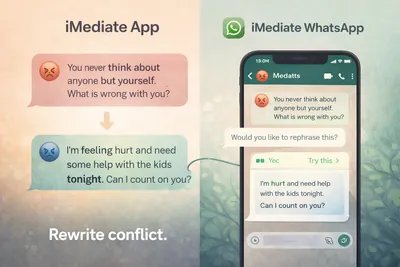
Who it serves: High-conflict co-parenting families, mediators, and legal support teams.
Operational problem: Escalating communication cycles created legal friction, emotional volatility, and avoidable costs.
What was built: A structured communication system with AI-assisted reframing, compliance-ready logs, and decision-safe workflows.
Impact: Reported outcomes include 40% lower litigation costs and faster dispute resolution.
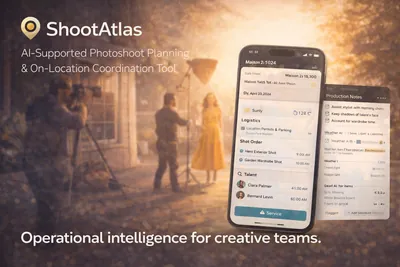
Who it serves: Production and field teams coordinating complex shoots across distributed locations.
Operational problem: Fragmented information flow caused schedule drift, resource waste, and operational blind spots.
What was built: A logistics intelligence layer for scheduling, inventory, and field-to-HQ coordination under real-world pressure.
Impact: Documented reductions in resource waste and stronger schedule reliability.
Who it serves: Roofing operations teams and maintenance organizations handling high job volume.
Operational problem: Survey-to-estimate workflows were slow, inconsistent, and difficult to scale.
What was built: A survey and workflow system that structures job data, standardizes analysis, and speeds dispatch planning.
Impact: Faster survey throughput and clearer operational visibility across maintenance pipelines.
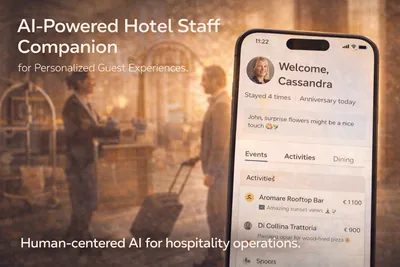
Who it serves: Hospitality teams requiring fast access to guest context at the point of service.
Operational problem: Important guest intelligence was trapped in disconnected systems and inaccessible during live interactions.
What was built: An AI-assisted context layer that surfaces actionable service intelligence in real time.
Impact: Improved service precision and reduced manual overhead in front-line decision making.
Who it serves: Product teams managing early-access products, waitlists, and controlled onboarding.
Operational problem: Auth, legal acceptance, product access, and communication were fragmented across multiple system boundaries.
What was built: A unified identity and access gateway for early-stage products with structured onboarding and controlled permissions.
Impact: Stabilized multi-product launch operations after three architecture rewrites.
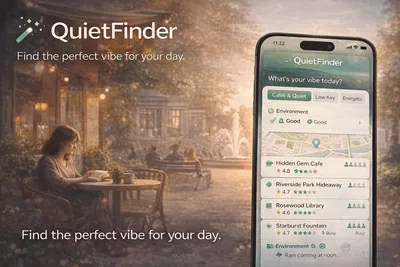
Who it serves: Urban users seeking low-noise, high-focus public environments.
Operational problem: Traditional map ranking favored popularity over situational comfort and environmental context.
What was built: A ranking engine blending contextual signals with custom scoring to surface calmer, more usable locations.
Impact: Created an operationally useful alternative to popularity-driven recommendations.